This guide sets out the UK Democracy Fund’s approach to grant funding
UK Democracy Fund Funding Guide
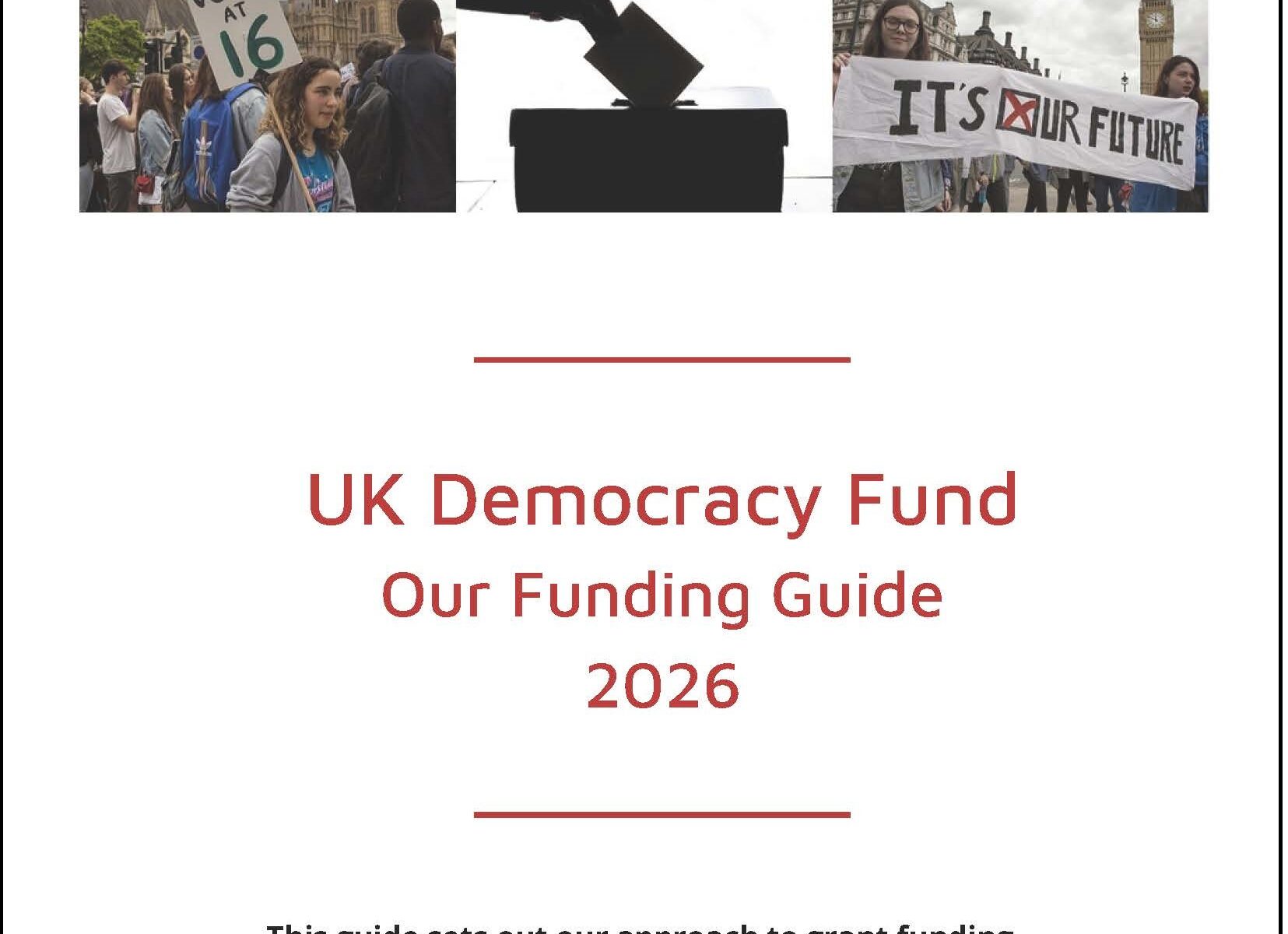
This guide sets out the UK Democracy Fund’s approach to grant funding
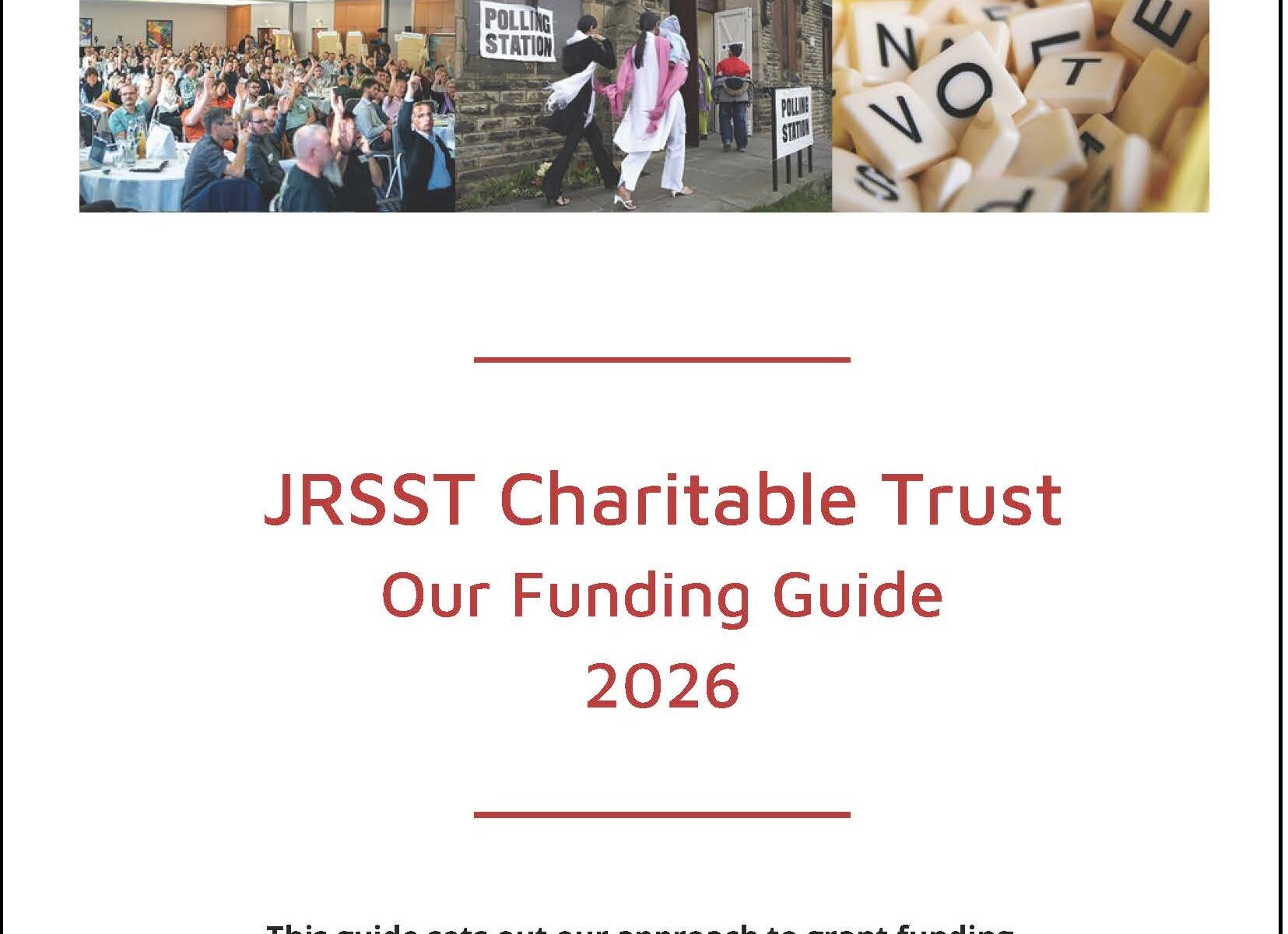
This guide sets out JRSST-CT’s approach to grant funding
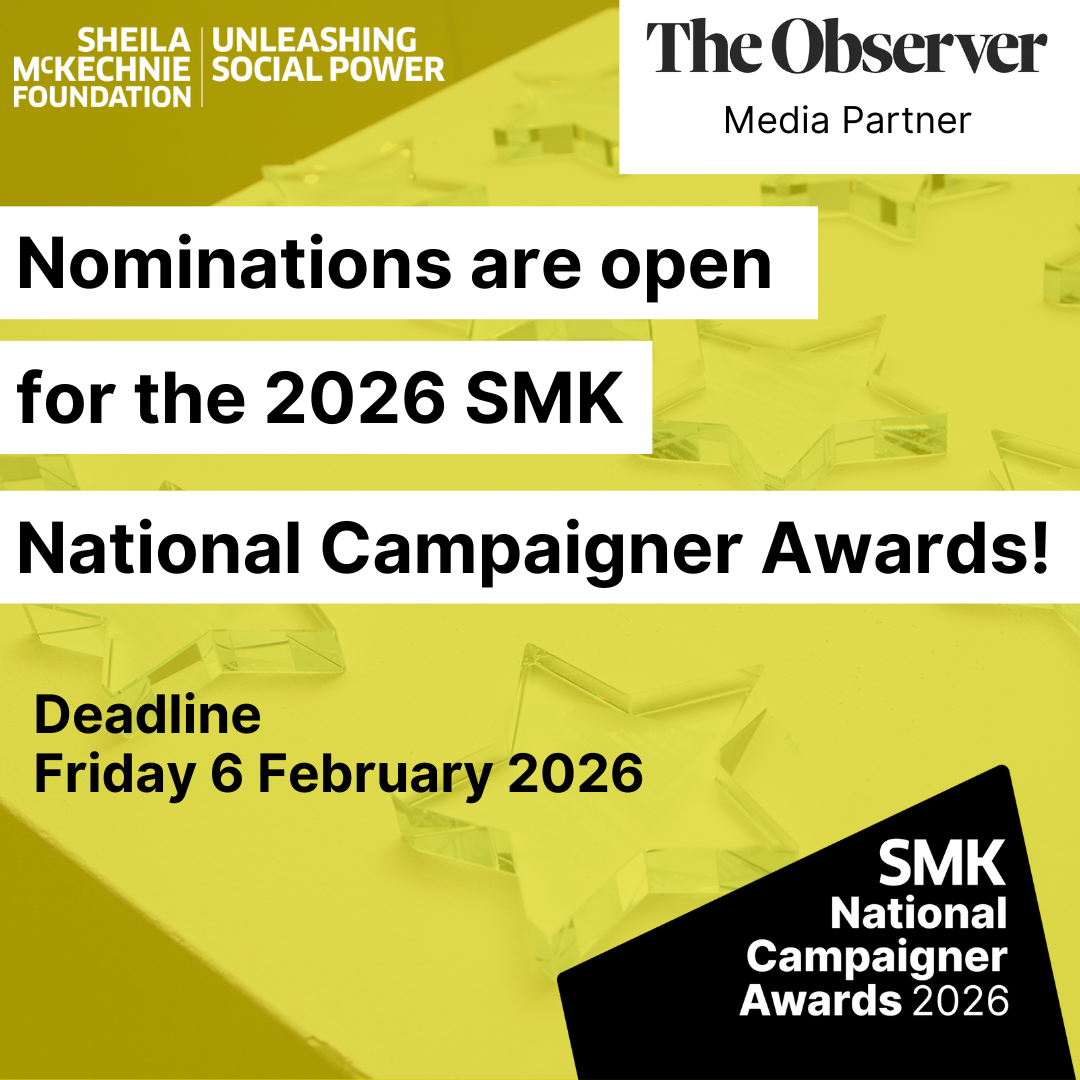
Nominations are now open for the SMK National Campaigner Awards 2026.
Each year, SMK celebrates the best campaigns and campaigners. Their interest is in finding those who have made change happen – most effectively, creatively and courageously.
These awards spotlight the changemakers who refuse to sit still: local heroes, national innovators, grassroots organisers, and powerhouse teams making real impact. If they’ve pushed boundaries, sparked action, or shown standout courage, SMK wants to hear about them.
What all entries will have in common is the determination to secure a specific change that will make things better – whether for an individual, a local neighbourhood or for every single one of us.
Nominations close at midnight on Friday 6 February 2026
JRRT is proud to sponsor the David & Goliath category of the SMK Awards. This Award is all about the little guys. It celebrates individuals or small campaign groups that take on much bigger organisations and challenge vested power.
Our sponsorship is made in memory of our friend and former Director, Lord David Shutt.
2025
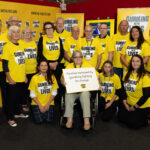
Gambling with Lives; founded by families who had all experienced the same loss — the death of a loved one due to gambling-related suicide. The families came together to share their experiences, challenge the dominant narrative of personal individual responsibility, and expose the structural and political failures that contributed to this harm.
2024
The Justice For Omisha Campaign ; one family and their community taking on the Home Office’s hostile environment immigration system and fighting for an NHS that is free to provide universal healthcare for all.
2023
Power for People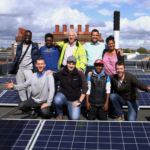 ‘s Community Energy Revolution campaign which co-ordinated grassroots advocacy across the UK for the Local Electricity Bill.
The Bill, if enacted, would empower community energy schemes to sell their clean energy back to their community. Their campaign gathered cross-party support from more than 300 MPs.
2022

The #FacebookHasNoStandards campaign from Coventry Youth Activists which sought to change the way disability hate and ableism is handled by social media platforms.
Nominations close on Friday 6 February 2026 at midnight.
Check out details of all of the SMK Award categories on the SMK website
This guide sets out JRRT’s approach to grant funding
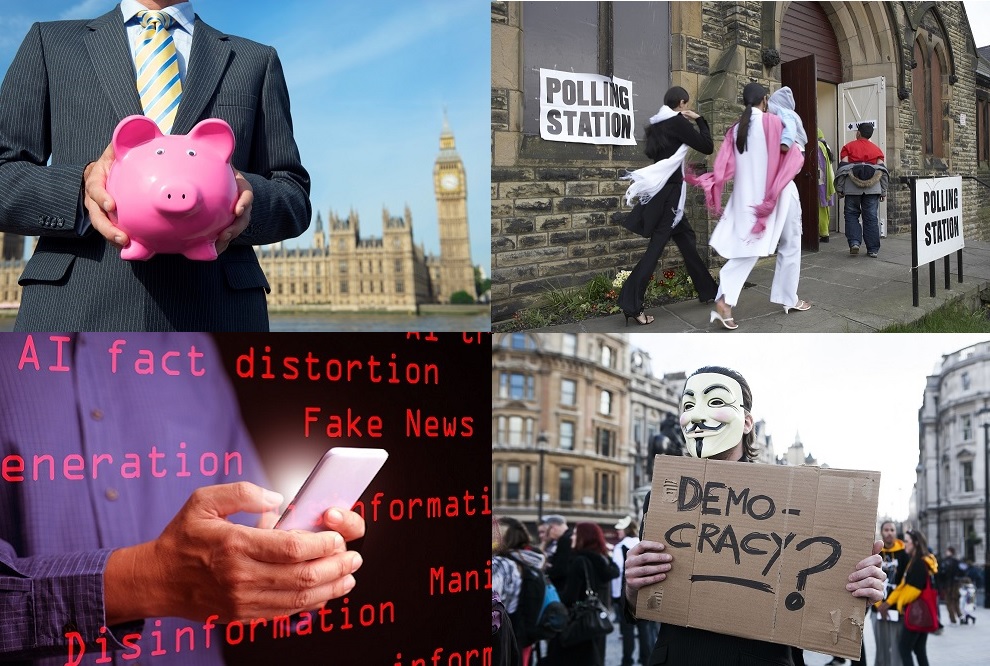
It took hundreds of pages of analysis and feedback, and a fair few groans about how long it was taking, but there was no pause in our grant making in the run up to and aftermath of the General Election.
It isn’t finished because no strategy ever is. It will evolve as the political landscape changes, and new opportunities and threats emerge. The priorities we have set out are where we believe we can currently exert most influence with our funding, expertise and energy.
We wanted the broad framework to be durable: to address both the long-term trends affecting most advanced democracies and the immediate threats we face in the UK. The strategy is constructed around two frames:
We wanted the strategy to be both a positive agenda to make democracy more democratic and a protective one in the face of populist, illiberal and authoritarian challenges. We believe it does that.
Our funding will be much more tightly focused around the five priority areas below. We will fund interventions that can leverage short- to medium-term policy or legislative goals as well as work to lay the foundations for deeper system reform addressing power imbalances.
2. Voter participation and election systems reform
3. Political rights – freedom of expression and protest rights
We will also fund work to monitor, expose and hold accountable bad actors responsible for much of the damage to democracy today, where it is integrated with one of the democracy priorities above.
JRRT will also fund political parties and connected organisations that work within them to advance democratic and political reform, and we will expand our Democratic Voices programme of direct funding to parliamentarians to champion reform.
This need to focus our limited resources means we will no longer be able to fund many of the important areas of work we have previously funded including our Truth to Power programme (Undercover Policing Inquiry excepted) and democracy issues outside these priorities.
Looking across our democracy priorities we see how often the impact is felt most acutely by people from racialised and minoritised ethnicities – whether the low rates of voter registration and turnout, hate speech targeting black women MPs, the use of facial recognition technology or policing of protest. We are committed to growing our funding in this space and to listen and understand where we can best add value.
It won’t come as a surprise that we value the many different ways in which the sector collaborates. Change is rarely achieved by a single organisation, but by a mix of organisations with shared visions adding value through mutually reinforcing contributions that may include some or all of policy research, insider advocacy, and pressure from campaigning and mobilising.
We spent time looking at the evidence in favour of multiyear grants and also at core and unrestricted funding. The Board did not need convincing of the value of being able to plan ahead and retain staff, but given the funding available, an abrupt shift could take the number of grants approved each year from mid-thirties to single figures with significant impact across the sector. We are moving carefully to increase the proportion of multiyear funding in our portfolio but expect most grants to be for specific targeted campaigns.
Perhaps the hardest decision was whether we should maintain our current level of grant funding. Recent levels of grant making were depleting the value of the endowment and, if continued, this would become hard to reverse. For the first time the Board has intentionally committed to a pathway that would lead to the Trust’s closure in 27 years. JRSST Charitable Trust, our connected charity, will spend out completely within 10 years. These are far-reaching decisions that reflect a refusal to be complacent about the challenges UK democracy faces.
Bringing more funding into the democracy sector is essential. We aim to maintain the UK Democracy Fund’s effective fundraising and to work with funders in other sectors to identify where aligning with democracy funding can support them to achieve their mission.
At the start of the process, we reflected on how much the world has changed since our 1904 Founding Memorandum and its rather loose role as a reference point and source of guiding principles. Perhaps more than we anticipated it would, the final strategy draws on Joseph Rowntree’s thinking about root causes rather than symptoms, and his preoccupation with rebalancing power. Our concerns about social media disinformation and bad actors echo his warnings about the danger posed by the power of selfish and unscrupulous wealth which influences public opinion largely through the press.
We are operating in a tough climate in which it is hard to move beyond firefighting to system reform. But there are openings we can build on. JRRT and UK Democracy Fund grantees and funders have played a significant role in securing inclusion of Votes at 16 and Automatic Voter Registration in the forthcoming Elections Bill and a chance to tip the scales against the undue influence of money in politics with a deeper reform agenda than the limited measures propose.
It was really important when we started this process to benefit from the perspectives and priorities shared by grantees and others, in survey responses, conferences, focus groups and Citizens’ Assemblies, and the mass of research and analysis across the sector.
We look forward to continued feedback and to working with grantees, funders and many others to strengthen democratic resilience and political equality.
An independent evaluation of the UK Democracy Fund
Through the tireless efforts of our grantee community, the UK Democracy Fund estimates that together we helped register 750,000 voters ahead of the 2024 General Election.
Grantees led campaigns in schools and universities, created youth-led content on social media, ran workshops in mosques and churches, and engaged migrant and racialised and minoritised communities in dozens of languages. Many piloted new ways of building trust and breaking down barriers to participation.
 The evaluation of the UK Democracy Fund, independently conducted by the Policy Institute at King’s College London, shows that these campaigns made a real difference.
Grantees contributed to hundreds of thousands of new voter registrations, developed policy-relevant evidence on electoral reform, and created lasting tools and strategies to strengthen participation.
Crucially, it shares lessons which the Fund, our grantees and the wider sector can take on. Campaigners looking to increase democratic participation should be building trust through culturally competent, community-led outreach, whether it be online or in person. Campaigns that embraced collaboration, shared learning, and adaptive strategies—supported by flexible funding—were best positioned to respond to challenges and deepen impact.
Going forward, embedding evaluation and sharing insights openly will be vital to sustaining momentum and strengthening the wider movement for democratic engagement.
Downloads:
Evaluation of the UK Democracy Fund (2025, Policy Institute, King’s College London)
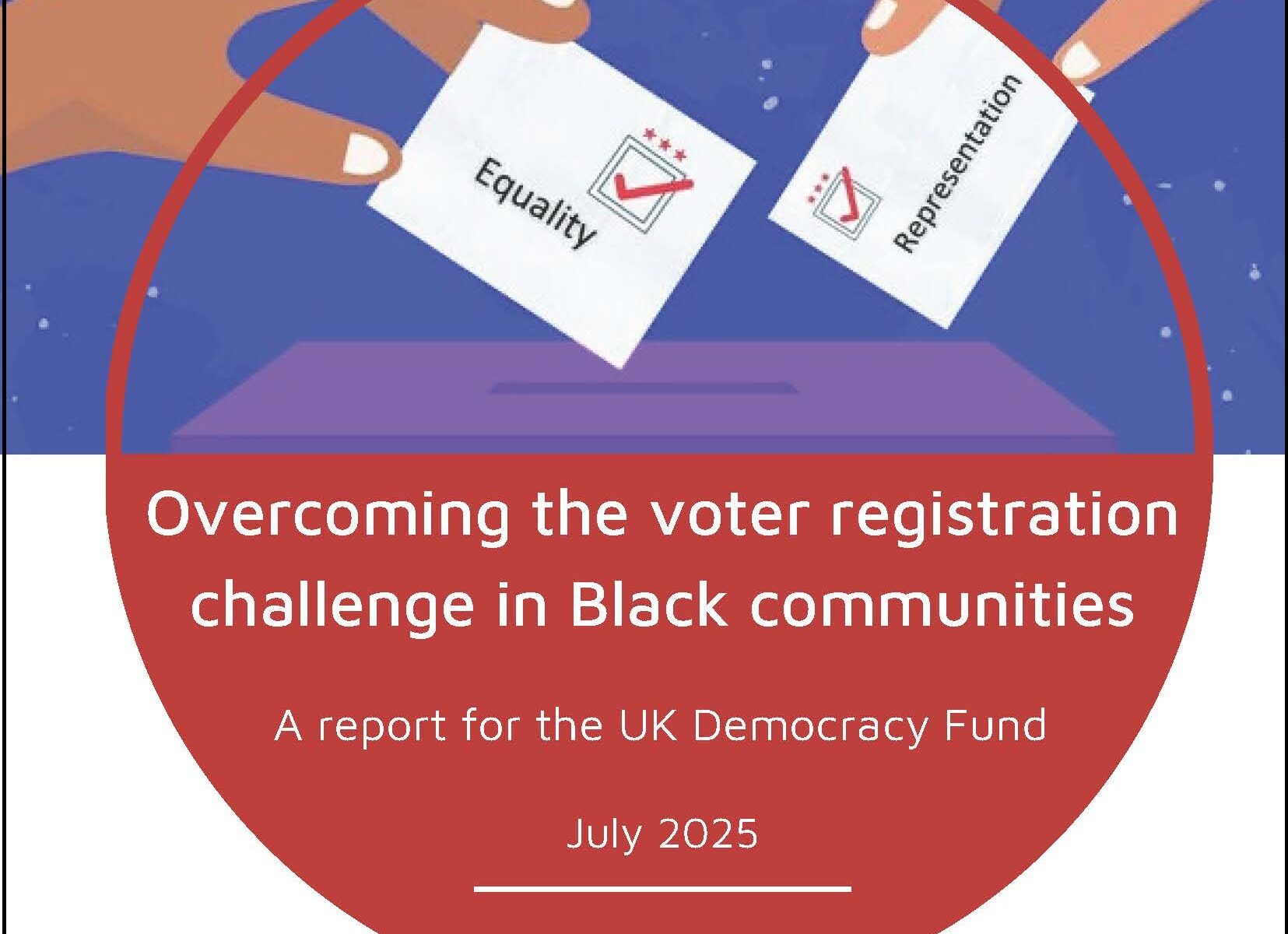
The UK Democracy Fund supported three pilots to learn more about mobilising Black voters through community leaders. Read more about what we found works, with recommendations for community leaders, funders and policy makers.
The UK Democracy Fund supported forty organisations to develop a shared, cross-sector vision for delivering Votes at 16 effectively across the UK.
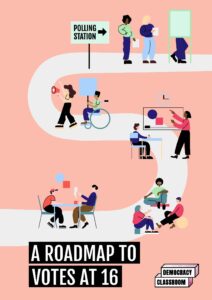 The Democracy Classroom Network, led by The Politics Project, published A Roadmap to Votes at 16, in Parliament on 16 July, at an event attended by the Minister for Democracy and Homelessness, Rushanara Ali MP.
Developed with input from hundreds of teachers, youth practitioners, young people and leading organisations, the roadmap sets out 16 key recommendations to ensure that lowering the voting age becomes a transformative step for UK democracy.
It argues that without significant investment in democratic education, youth engagement and infrastructure, the extension of the franchise risks being symbolic rather than substantive.
The roadmap recommends:
The roadmap has been endorsed by 40 key organisations, including: Association for Citizenship Teaching, Association for Colleges, Education Scotland, National Union of Students UK (NUS), National Youth Agency, Network of Regional Youth Work Units, Shout Out UK , The Politics Project and UK Youth alongside leading academics in democratic education and participation.
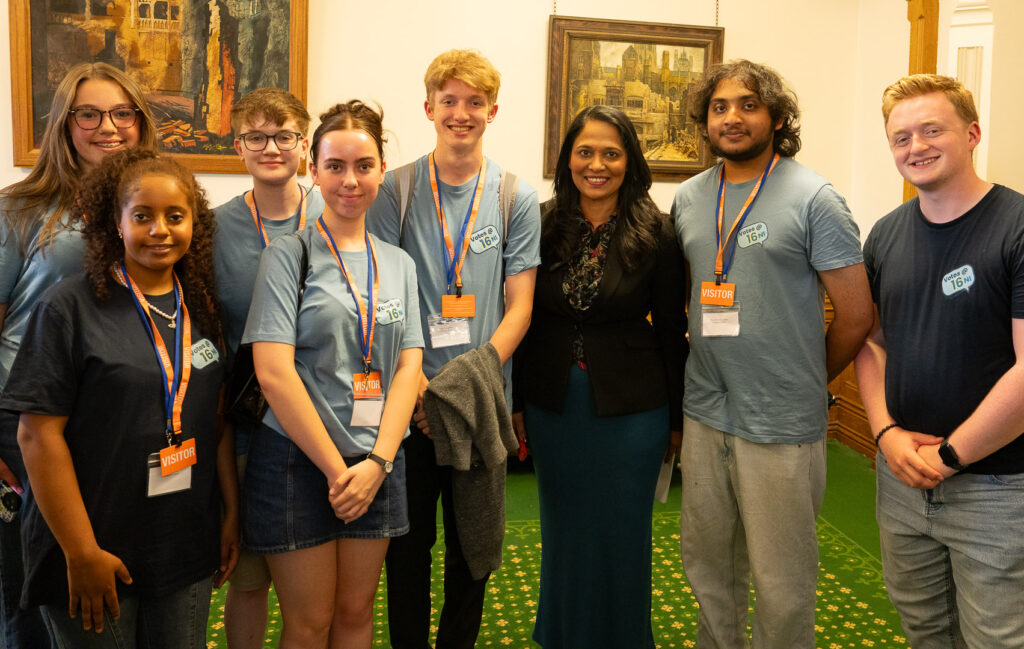
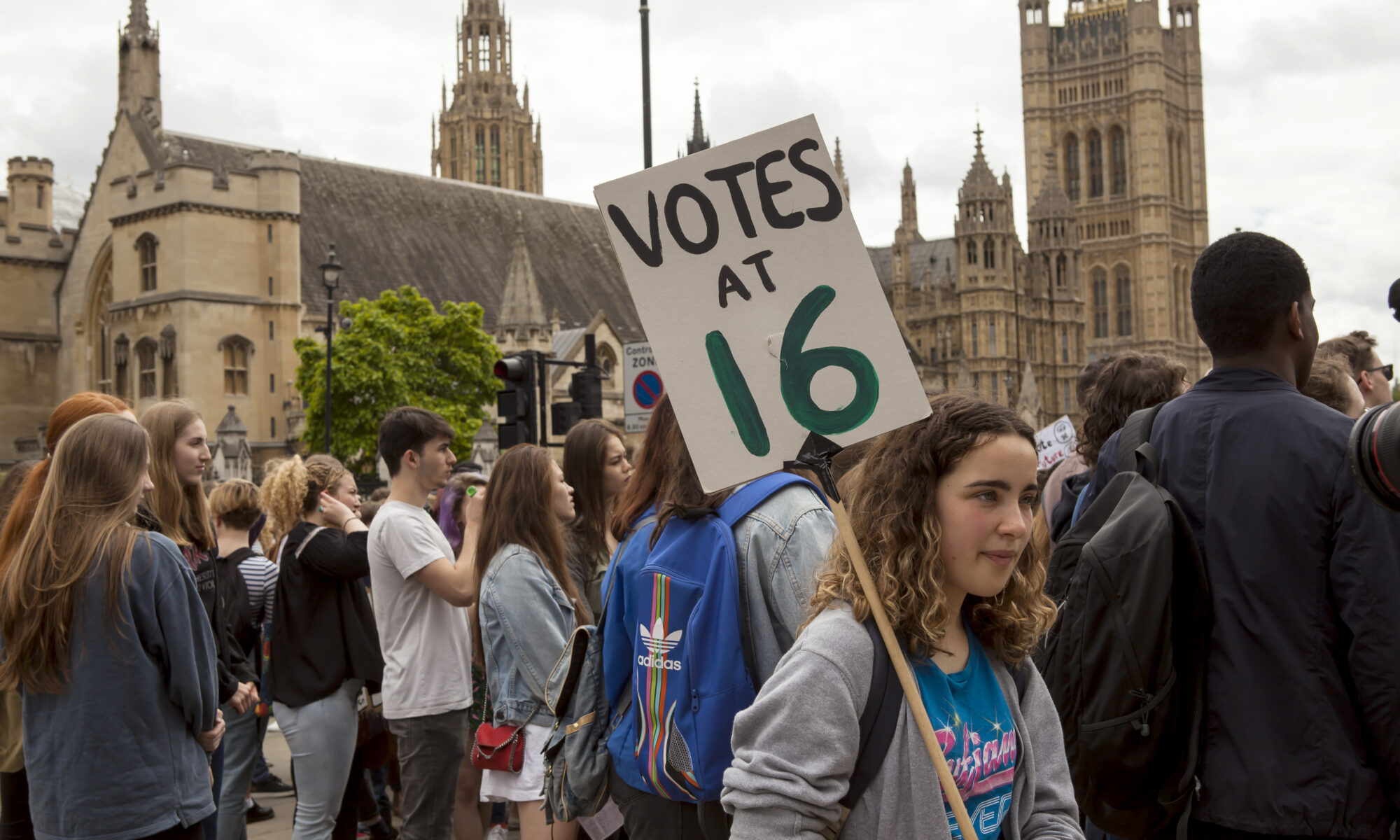
Thanks to the excellent work of campaigners, including many JRRT and UK Democracy Fund grantees, we see some really positive steps towards renewing our democracy.
Some highlights include:
A firm commitment to introducing Votes at 16 – enabling approximately 1.5 million young people to vote in elections, a transformative reform for youth voice.
A significant expansion of Voter ID to include bank cards and digital forms of ID, which is likely to be impactful, particularly for newly enfranchised young voters.
And recognition of the importance of a more automated system for voter registration, with plans to better use existing Government data for the ease of the voter, and a commitment to “work to create an automated registration system” over the coming years. The timeline and type of automated system is as yet unclear. The Fund has worked with experts to produce guidance on what effective Automatic Voter Registration could look like in the UK. It is important that steps are taken to ensure that this happens in time for the next General Election (expected 2028 or 2029) to urgently help reverse our declining participation rates.
Other areas of progress include technical changes to the timetable for elections, to make it easier for people to vote, an enhanced role for the Electoral Commission in encouraging voter participation, and measures to rationalise the complex legislation on election offences, making it easier to understand, fairer to apply.
In some areas, there has been progress though less than campaigners hoped for
Rules around campaign finance will be tightened, such as reporting thresholds for Unincorporated Associations and permissibility checks for their donors. Rules on company donations will also be tightened. The substantial increase in possible fines for serious breaches is also welcome. However, there is still no sign of a donations cap.
Another outstanding issue is the independence of the Electoral Commission, as the strategy and policy statement introduced in the last Elections Bill is so far to remain in place. Chair of the Electoral Commission John Pullinger said “The independence and impartiality of an electoral commission must be clear for voters and campaigners to see, and this form of influence from a government is inconsistent with that role. This bill offers a timely opportunity to repeal the power for government to designate a statement.”
Together, this announcement represents a very welcome step forward.
However, is also clear that work remains to be done to ensure we achieve the government’s ambition to “bequeath a democracy more robust and relevant to the next generation.”
Image Jane Campbell, Shutterstock